
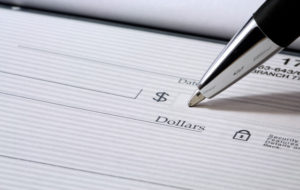
You should always get a down payment on your jobs.
It’s easy to ask someone to do something; it’s harder to hand over money. Your client isn’t committed until they’ve written the first check.
You’re committed as soon as you begin drawing plans, ordering materials, scheduling employees or starting on the job, whichever comes first. When you’re committed to a project and they aren’t, you are at risk. Money changing hands means a commitment is made. Always get a down payment.
Remodeling. Your down payment should be between 20% and 40%. Be careful how much you ask for. If you ask for more than 40%, you might be perceived as one of those con artists who collect a high down payment then disappears. Don’t be greedy; ask for enough to cover your startup costs and the first two weeks of your overhead.
Estimating Profitably — Ten Tips to Improve Your Estimating Skills
Sign up for our newsletter and start pricing jobs with confidence.
No spam. Unsubscribe anytime.
Some states dictate a down payment of only 10% of the sales price or $1,000, whichever is less. You can do that and add a job setup fee, a job initialization or design fee, a material purchase fee, etc. Just make sure you get enough to have a commitment.
You’ll also find a reduction in the number of cancellations when you get a down payment. Why? Because money changing hands means a commitment is made.
New home construction. The down payment will be a smaller percentage, but you still need the money up front. You aren’t in the finance business, you’re a contractor. It’s not your responsibility to finance the new home, it’s your responsibility to build it. Remember to avoid a discussion with any bank involved. Your contract is with the building owner, not the bank, and the building owner needs to make sure you get paid.
Specialty contractors. Regardless of the size of the job, you should be getting a down payment. That applies to projects where you are working directly with a home or building owner, and it also applies to jobs where you are hired by a general contractor.
It’s a lot easier to sign a contract than to sign a check. If your client isn’t willing to commit to their project by making a down payment, you should reconsider whether the project is worth your risk.
The Bottom Line:
Between 20% and 40% on remodeling jobs — enough to cover startup costs and your first two weeks of overhead. Ask for more than 40% and you risk looking like the con artist who collects and disappears. Michael Stone explains the workaround for states that cap down payments, and why money changing hands cuts your cancellations.
Related Articles:
Progress Payments: Keeping a Positive Cash Flow
Downpayment on a construction job
Down Payments
Specialty Contractors and Down Payments
Use the Right Payment Schedule

The knowledge and experience Michael Stone gained in his 60+ years in construction has helped thousands of contractors improve their businesses. He is the author of Markup & Profit Revisited, Profitable Sales, and Estimating Construction Profitably, and is available for one-on-one consultations. More here.